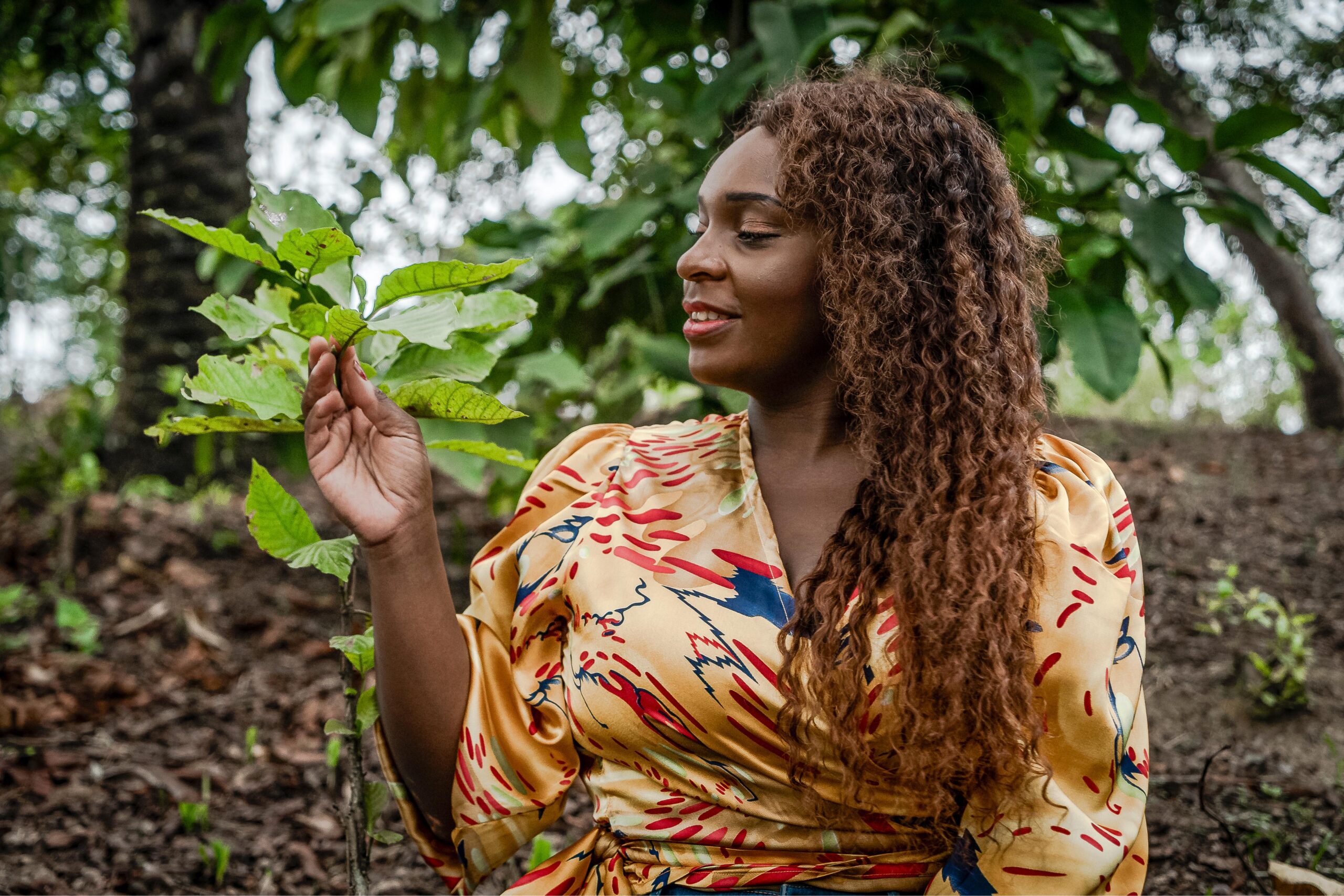
Coffee was once one of the Democratic Republic of the Congo’s main agricultural exports. In the 1970s and 80s, the country ranked among Africa’s leading producers of the sought-after commodity, thanks to the country’s rich and fertile volcanic soils, plentiful rain and favourable conditions for both arabica and robusta coffee varietals.
That prominence has long faded. From the 1990s onwards, conflict, political instability and economic decline, particularly in the country’s highly fertile eastern highlands, disrupted the sector. Infrastructure collapsed, plantations were abandoned and supply chains broke down. Today, the Democratic Republic of Congo produces only a fraction of its former output, despite growing global demand for traceable and specialty coffee.
Yet a quiet revival is emerging, driven less by state intervention than by a new generation of entrepreneurs seeking to rebuild the industry from within. While the country’s restive eastern Kivu region is the best area for arabica production, robusta has for decades been grown elsewhere, including in the Equateur, Haut-Uele, and Tshopo provinces. Now, coffee is being grown elsewhere including close to the capital, Kinshasa.
A legacy under pressure
For Congolese entrepreneur Tisya Mukuna, the story of coffee reflects the country’s broader economic trajectory.
“Congolese coffee has a long history. More than 40 years ago, the DRC was one of the leading producers and exporters. Today, that is no longer the case because of political and economic conflicts,” she said.
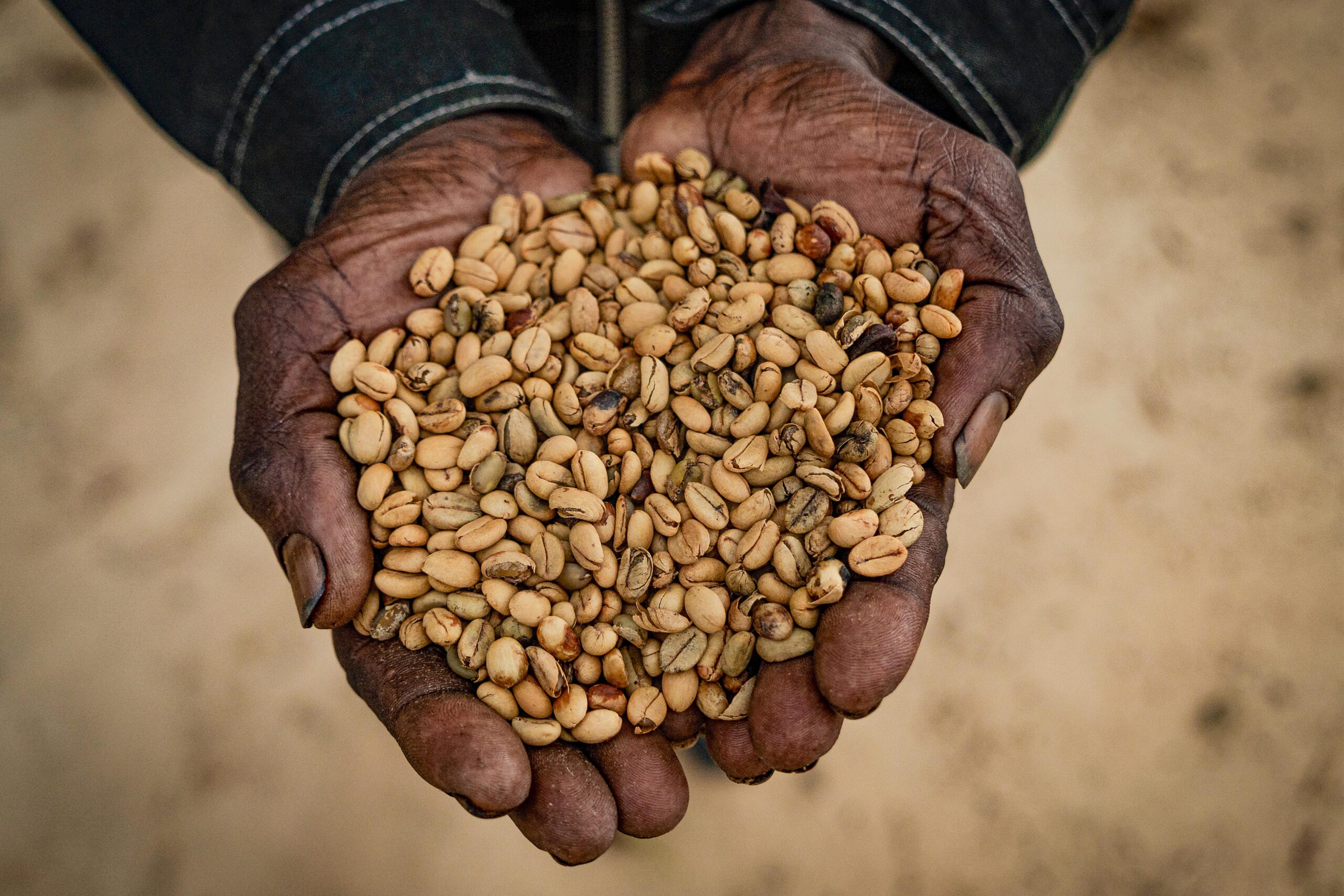
Mukuna is part of a growing group of Congolese producers working to reposition coffee not just as an export commodity, but as a source of local value and national identity.
“With my coffee brand, La Kinoise café, my ambition is to restore the Congo’s reputation and bring attention back to Congolese coffee, while helping people appreciate its flavour,” she explained.
A new generation reshapes the sector
Mukuna began her journey in 2018 with a coffee plantation on Mont Ngafula, on the outskirts of Kinshasa. Today, she has 20 hectares under cultivation. In 2020, she launched La Kinoise Café, built on a model of producing, processing and selling coffee locally. Initially however, her entry into the sector was met with scepticism.
“When I said I wanted to grow coffee in Kinshasa, people told me it was impossible. But I’m persistent, so I decided to try. What started as a challenge became a business.”
Her experience reflects a broader shift, as younger entrepreneurs experiment with models that challenge the traditional reliance on raw exports.

A central challenge for the sector remains the lack of local processing. Much of Congo’s coffee is still exported as raw beans, with value added abroad. Mukuna chose a different approach.
“I decided to control the entire value chain, from the seed to the cup. Often, coffee is sent abroad to be roasted and then sold back to us at a higher price. I wanted to show that we have the expertise here.”
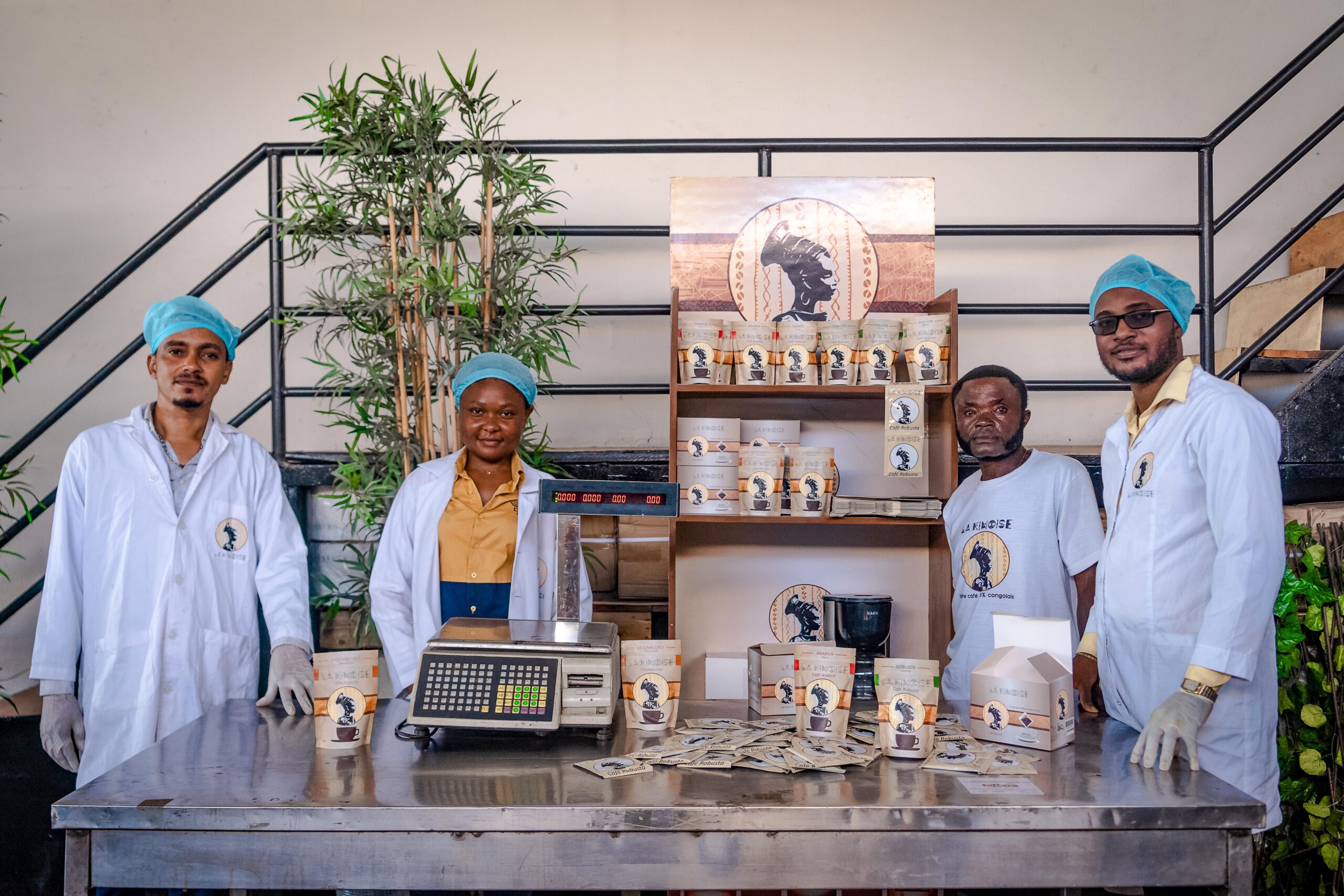
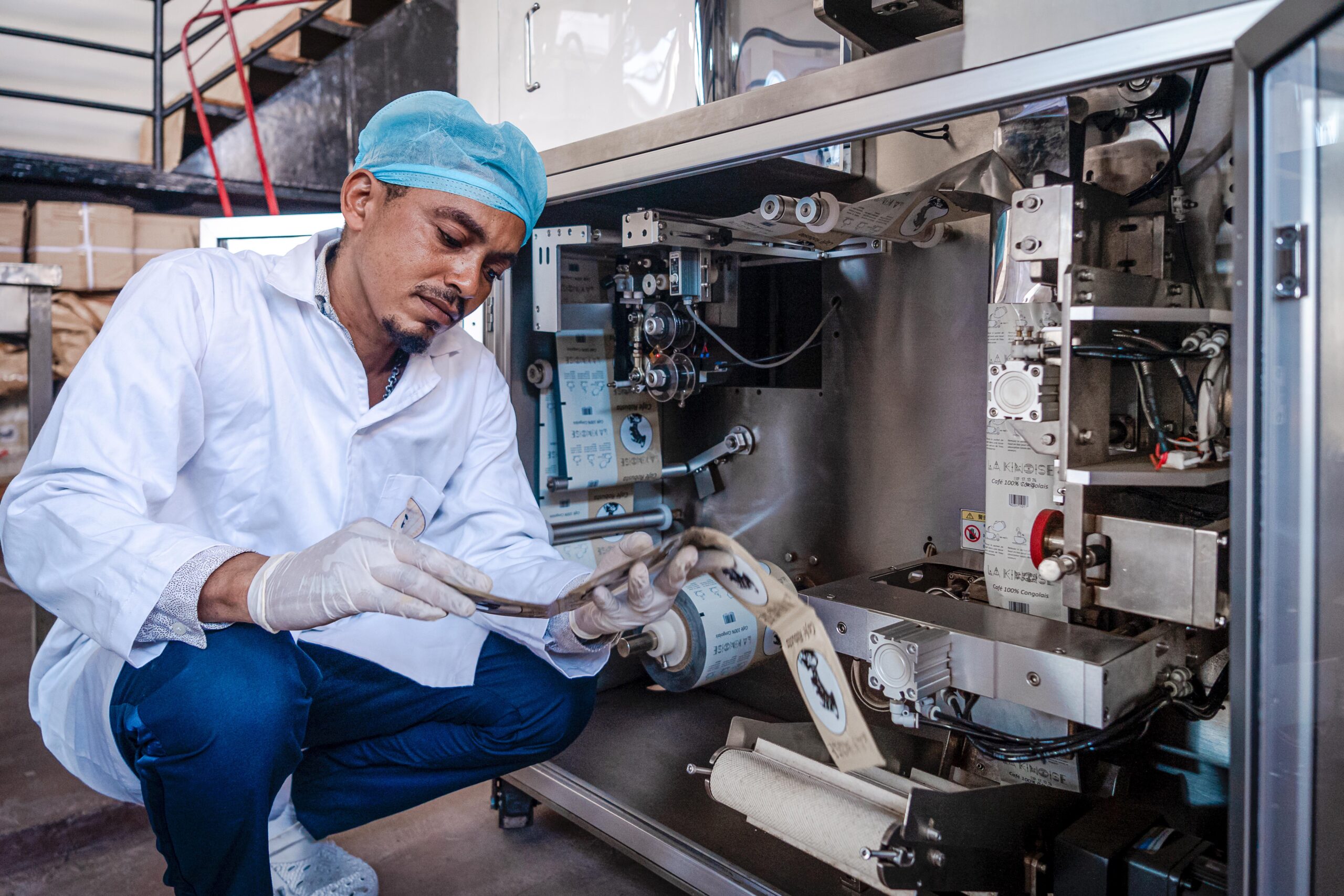
In addition to her own plantation, where she grows 90% arabica and 10% robusta, she buys coffee from other producers across the country, providing technical and financial support to farmers and integrating their production into her supply chain. Her factory has a processing capacity of over 15,000 packets per month. By integrating production, transformation and distribution, her company aims to retain value locally and create jobs.
“It creates more impact and more jobs, and it proves that expertise does not only exist elsewhere. Everything is made in Congo.”
Structural barriers persist
Despite these efforts, the sector continues to face major constraints. Limited access to finance, poor infrastructure and logistical challenges remain key obstacles. Green coffee production reached 65,701 tonnes in 2024 in Congo (DRC), according to Faostat. This is 5.28% more than in the previous year. Production reached an all-time high of 103,080 tonnes in 1988 with a low of 28,233 tonnes in 2014. Infrastructure remains a problem.
“Agricultural roads are almost non-existent. Sometimes we have to transport coffee by motorbike,” Mukuna explains. “But the biggest challenge has been human resources, finding people who believe in the vision.”
For an industry professional with more than a decade of experience, these challenges are systemic.
“The issue is not the soil or the potential; it is the organisation. Without infrastructure, financing and structured producer networks, it is difficult to compete.”
Such constraints have long prevented Congolese coffee from matching the consistency and quality standards of neighbouring producers.
Changing perceptions, recognition and outlook
Women have always played a key role in agriculture in the DRC, but remain underrepresented in leadership positions, particularly in export sectors.
Mukuna, however, prefers a broader view.
“We are entrepreneurs first. Whether you are a woman or a man, what matters is creating value.”
Still, she acknowledges the realities of a male-dominated environment.
“There were times when I was the only woman and the only young person in the room. I had to prove my credibility.”
Mukuna’s work has gained international recognition. In 2022, she was named among Forbes Africa’s 30 Under 30. Her coffee has been recognised at the International Agricultural Show in Paris, and in 2024 she was selected as a finalist for African Business Heroes.
“These recognitions allow us to be heard in spaces where we might not otherwise be,” she says. “But we don’t work for trophies, we work because we have a vision.”
Looking ahead, both entrepreneurs and experts agree that deeper reforms are needed.
“We need investment in agriculture, better infrastructure, easier export processes and less bureaucracy,” Mukuna said. “There must be a clear economic vision and a defined place for agriculture.”
For now, Congo’s coffee revival remains fragile, driven largely by individual initiatives. But with global demand rising and local innovation growing, the sector is slowly regaining ground. From farm to cup, Congolese coffee is beginning to tell a new story, one shaped as much by ambition as by its past.
Story Credit: Andrino Akuda Kangela for Bird Story Agency
The post Tisya Mukuna Is on a Mission to Revive Congo’s Coffee Industry appeared first on BellaNaija - Showcasing Africa to the world. Read today!.
from BellaNaija https://ift.tt/NxstyWq